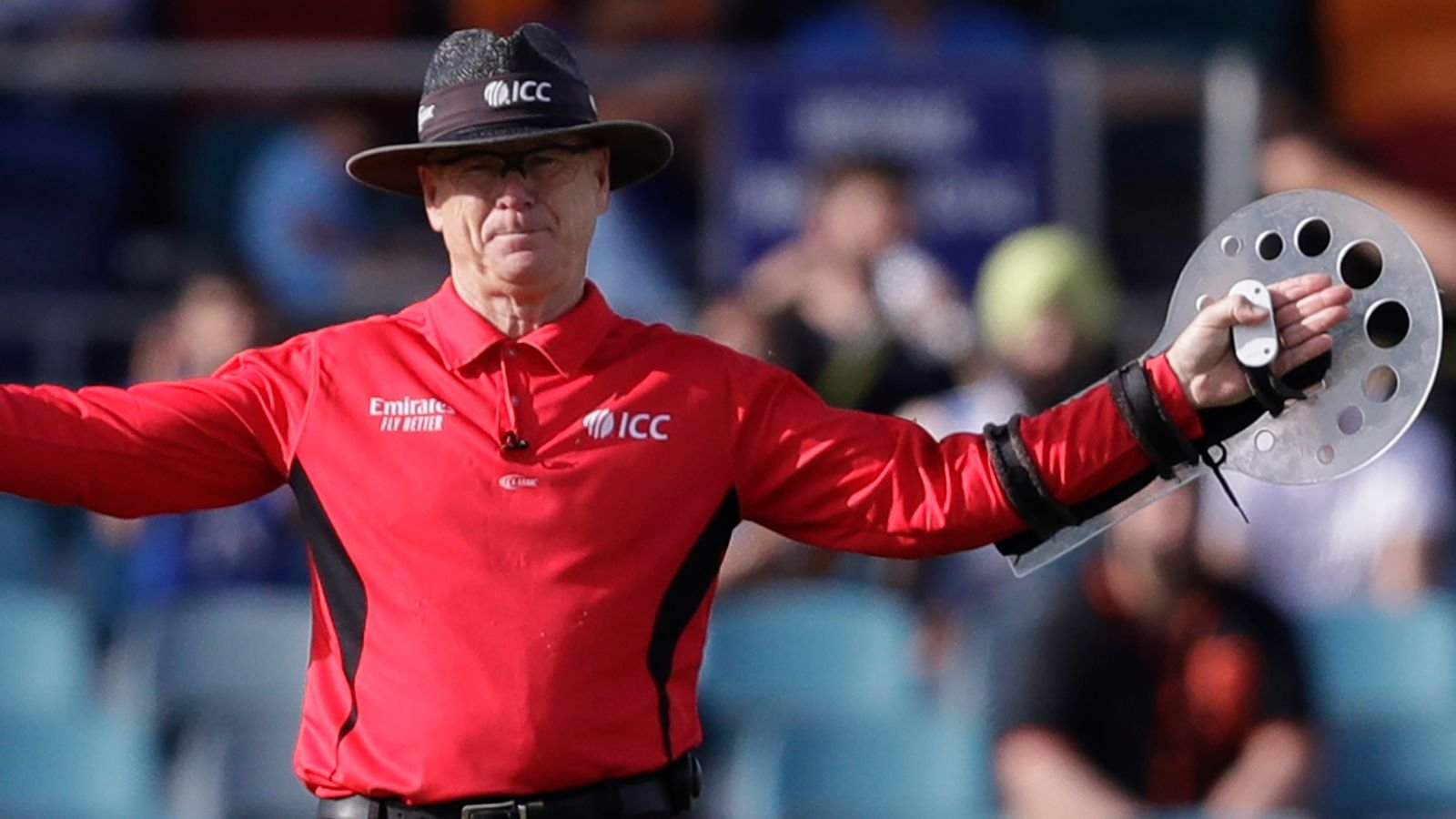
 Technology has changed cricket over the last two decades. Umpires no longer rely only on what they see with the naked eye. Today, they use cameras, microphones, ball-tracking systems and smart equipment to make more accurate decisions.
Most international matches use the Decision Review System (DRS), which combines several technologies to help the on-field umpire and the third umpire. The ICC allows approved technologies such as Hawk-Eye or VirtualEye for ball tracking, UltraEdge or Real-Time Snickometer for edge detection, Hot Spot in some matches, broadcast replays and LED stumps and bails.
Technology Used by Cricket Umpires
| Technology | What It Does | Used For |
|---|---|---|
| Hawk-Eye | Tracks the ball and predicts its path | LBW decisions |
| UltraEdge | Detects tiny sounds when the ball touches the bat | Edges and catches |
| Snickometer | Audio-based edge detection | Bat-pad and caught behind appeals |
| Hot Spot | Infrared cameras show where the ball made contact | Bat or pad contact |
| Third Umpire Replays | Uses slow-motion and multiple camera angles | Run-outs, stumpings, boundaries |
| LED Stumps and Bails | Lights up when the wicket is broken | Close stumpings and run-outs |
| Stump Microphones | Capture sounds near the wicket | Edge detection and player communication |
| Speed Gun | Measures bowling speed | Broadcast statistics |
How Each Technology Works
1. Hawk-Eye
Hawk-Eye uses several high-speed cameras placed around the ground. The cameras follow the ball from the bowler’s hand until it hits the batter or passes the stumps.
It helps umpires decide:
-
Whether the ball pitched in line
-
Whether it hit the batter in line
-
Whether it would have hit the stumps
It is mainly used for LBW reviews. Hawk-Eye first appeared in cricket broadcasts in 2001 and later became a major part of DRS.
2. UltraEdge
UltraEdge combines stump microphones with slow-motion video.
When the ball passes the bat, the system checks for a small sound. If the audio spike matches the exact frame where the ball reaches the bat, the third umpire can confirm an edge.
It is commonly used for:
UltraEdge is considered more advanced than the original Snickometer because it synchronizes sound with ultra-slow-motion footage.
3. Snickometer
Snickometer was the first popular sound-based edge detection system.
It also detects small sounds made when the ball touches the bat. Some matches still use Real-Time Snickometer, while many now use UltraEdge instead. Both are approved by the ICC.
4. Hot Spot
Hot Spot uses infrared cameras.
When the ball hits the bat or pad, friction creates a small heat mark. The camera captures this as a bright white spot.
Hot Spot is not used in every series because of its cost and equipment requirements, but it remains an ICC-approved technology.
5. Third Umpire Replays
The third umpire watches video footage from different camera angles.
This technology helps with:
-
Run-outs
-
Stumpings
-
Boundary checks
-
Fair catches
-
No-ball reviews
Slow-motion replays often show details that are impossible to see in real time.
6. LED Stumps and Bails
Modern stumps contain sensors and LED lights.
The lights flash the moment the bails leave the stumps, helping umpires judge extremely close stumpings and run-outs.
The famous Zing Bails are approved for international cricket.
7. Stump Microphones
Microphones placed near the stumps capture:
These sounds are also used by UltraEdge during reviews.
8. Speed Gun
Radar-based speed guns calculate how fast a bowler delivers the ball.
Although they do not help make decisions, they provide important information during broadcasts.
How DRS Uses These Technologies
| Decision | Technology Used |
|---|---|
| LBW | Hawk-Eye |
| Edge | UltraEdge or Snickometer |
| Run-out | Third Umpire Replays + LED Bails |
| Stumping | Slow-motion cameras + LED Bails |
| Boundary | Multiple camera angles |
| No-ball | Video replay |