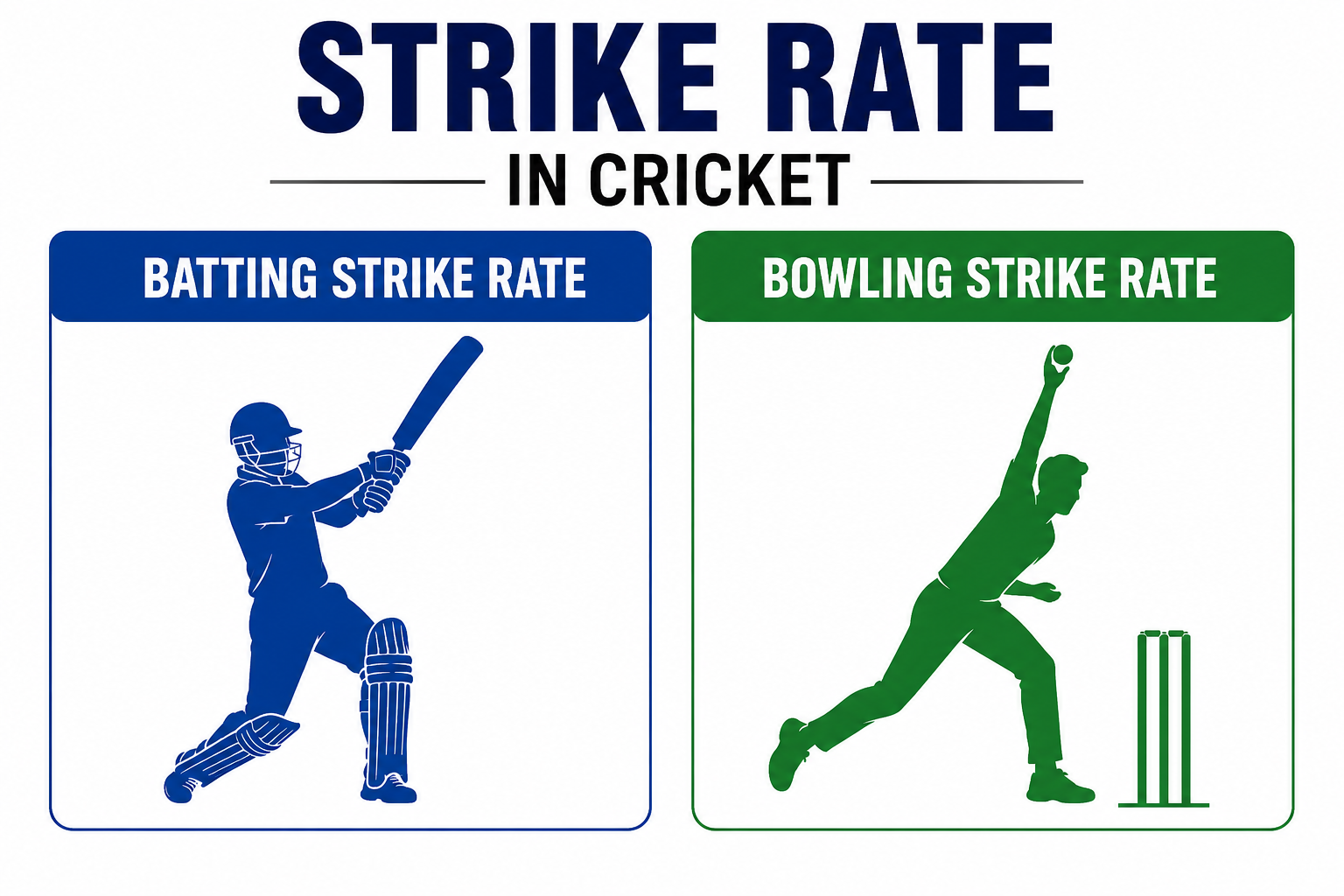
Strike rate is one of the most common statistics in cricket. It shows how quickly a batter scores runs or how often a bowler takes wickets. A good strike rate can have a big impact on a match, especially in limited-overs cricket.
What Is Batting Strike Rate?
Batting strike rate tells us how fast a batter scores runs. It is calculated by dividing the total runs scored by the number of balls faced and then multiplying the result by 100.
Formula:
Batting Strike Rate = (Runs Scored ÷ Balls Faced) × 100
Simple Example
| Runs Scored | Balls Faced | Strike Rate |
|---|---|---|
| 50 | 40 | 125.00 |
| 75 | 50 | 150.00 |
| 100 | 60 | 166.67 |
What Is Bowling Strike Rate?
Bowling strike rate shows how many balls a bowler needs to take one wicket. Unlike batting strike rate, a lower bowling strike rate is better because it means the bowler is taking wickets more often.
Formula:
Bowling Strike Rate = Balls Bowled ÷ Wickets Taken
Simple Example
| Balls Bowled | Wickets Taken | Bowling Strike Rate |
|---|---|---|
| 60 | 3 | 20.00 |
| 48 | 2 | 24.00 |
| 120 | 5 | 24.00 |
Why Is Strike Rate Important?
Strike rate helps measure how effective a player is.